🎉 Up to 70% Off Selected ItemsShop Sale


Shimosuwa, from Sixty-Nine Stations of the Kisokaidō Woven Throw Blanket
“Shimosuwa, from Sixty-Nine Stations of the Kisokaidō” is a color woodblock print dating to 1835–38. It was created by Utagawa Hiroshige in Japan, Edo period (1615–1868). Japanese woodblock artists distilled scenes into bold outline and luminous color, a style that went on to shape modern art and design. Rewoven as a throw blanket, its bold line and color comes alive in soft, tactile detail to bring a piece of museum history into your home.
Woven to order on a jacquard loom from a soft cotton blend, it comes in two sizes — 50×60" and 60×80" — with a fringed edge and a fully reversible face.
Made in the USA and produced just for you. Each blanket is typically crafted in 3–5 business days and arrives within about 1–2 weeks.
Care: machine wash cold on a gentle cycle with like colors, then tumble dry low or lay flat to dry. Do not bleach or dry-clean; use a cool iron on the reverse only if needed. The weave grows softer with every wash.
The original artwork is in the public domain, preserved by the Cleveland Museum of Art.
Woven to order on a jacquard loom from a soft cotton blend, it comes in two sizes — 50×60" and 60×80" — with a fringed edge and a fully reversible face.
Made in the USA and produced just for you. Each blanket is typically crafted in 3–5 business days and arrives within about 1–2 weeks.
Care: machine wash cold on a gentle cycle with like colors, then tumble dry low or lay flat to dry. Do not bleach or dry-clean; use a cool iron on the reverse only if needed. The weave grows softer with every wash.
The original artwork is in the public domain, preserved by the Cleveland Museum of Art.
Select Finish
Select Size
From $68.60
Original: $195.99
-65%Shimosuwa, from Sixty-Nine Stations of the Kisokaidō Woven Throw Blanket—
$195.99
$68.60More Images


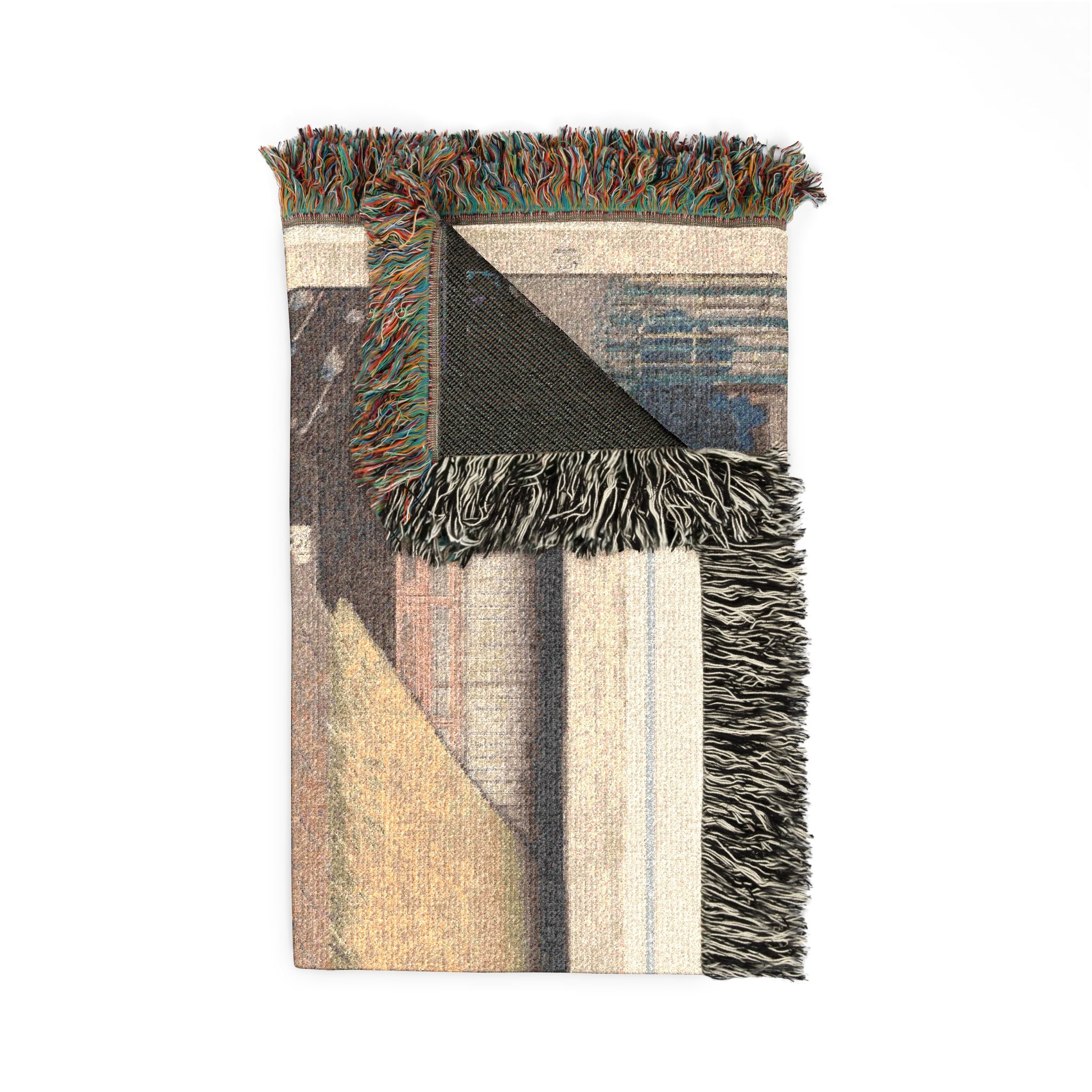
Shimosuwa, from Sixty-Nine Stations of the Kisokaidō Woven Throw Blanket
“Shimosuwa, from Sixty-Nine Stations of the Kisokaidō” is a color woodblock print dating to 1835–38. It was created by Utagawa Hiroshige in Japan, Edo period (1615–1868). Japanese woodblock artists distilled scenes into bold outline and luminous color, a style that went on to shape modern art and design. Rewoven as a throw blanket, its bold line and color comes alive in soft, tactile detail to bring a piece of museum history into your home.
Woven to order on a jacquard loom from a soft cotton blend, it comes in two sizes — 50×60" and 60×80" — with a fringed edge and a fully reversible face.
Made in the USA and produced just for you. Each blanket is typically crafted in 3–5 business days and arrives within about 1–2 weeks.
Care: machine wash cold on a gentle cycle with like colors, then tumble dry low or lay flat to dry. Do not bleach or dry-clean; use a cool iron on the reverse only if needed. The weave grows softer with every wash.
The original artwork is in the public domain, preserved by the Cleveland Museum of Art.
Woven to order on a jacquard loom from a soft cotton blend, it comes in two sizes — 50×60" and 60×80" — with a fringed edge and a fully reversible face.
Made in the USA and produced just for you. Each blanket is typically crafted in 3–5 business days and arrives within about 1–2 weeks.
Care: machine wash cold on a gentle cycle with like colors, then tumble dry low or lay flat to dry. Do not bleach or dry-clean; use a cool iron on the reverse only if needed. The weave grows softer with every wash.
The original artwork is in the public domain, preserved by the Cleveland Museum of Art.
Product Information
Product Information
Shipping & Returns
Shipping & Returns
Description
“Shimosuwa, from Sixty-Nine Stations of the Kisokaidō” is a color woodblock print dating to 1835–38. It was created by Utagawa Hiroshige in Japan, Edo period (1615–1868). Japanese woodblock artists distilled scenes into bold outline and luminous color, a style that went on to shape modern art and design. Rewoven as a throw blanket, its bold line and color comes alive in soft, tactile detail to bring a piece of museum history into your home.
Woven to order on a jacquard loom from a soft cotton blend, it comes in two sizes — 50×60" and 60×80" — with a fringed edge and a fully reversible face.
Made in the USA and produced just for you. Each blanket is typically crafted in 3–5 business days and arrives within about 1–2 weeks.
Care: machine wash cold on a gentle cycle with like colors, then tumble dry low or lay flat to dry. Do not bleach or dry-clean; use a cool iron on the reverse only if needed. The weave grows softer with every wash.
The original artwork is in the public domain, preserved by the Cleveland Museum of Art.
Woven to order on a jacquard loom from a soft cotton blend, it comes in two sizes — 50×60" and 60×80" — with a fringed edge and a fully reversible face.
Made in the USA and produced just for you. Each blanket is typically crafted in 3–5 business days and arrives within about 1–2 weeks.
Care: machine wash cold on a gentle cycle with like colors, then tumble dry low or lay flat to dry. Do not bleach or dry-clean; use a cool iron on the reverse only if needed. The weave grows softer with every wash.
The original artwork is in the public domain, preserved by the Cleveland Museum of Art.